
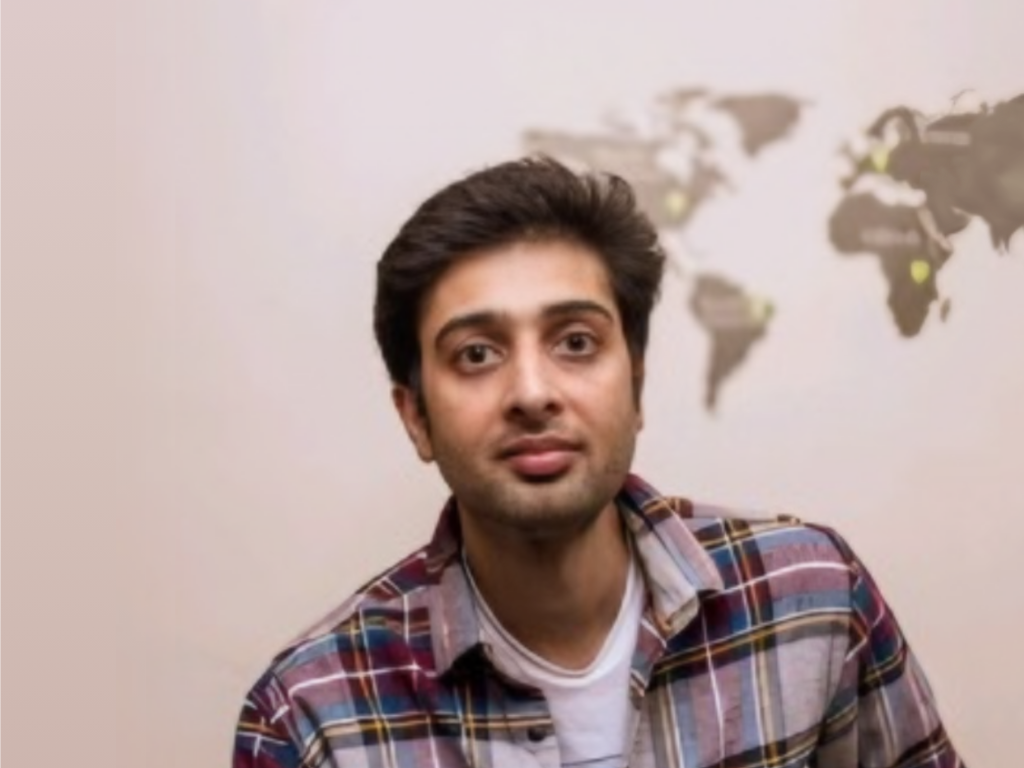
HLT Seminars: “Privacy, and Deepfakes: Voices We Must Protect” by Ajinkya Kulkarni
On 27 March, the INESC-ID’s Human Language Technologies (HLT) scientific area will bring Dr. Ajinkya Kulkarni, from the Idiap Research Institute, in Switzerland, for a seminar titled “Privacy, and Deepfakes: Voices We Must Protect”. The talk will be hosted by HLT’s Scientific Coordinator Alberto Abad and will focus on the under-representation of children in speech technologies, addressing how voice anonymisation techniques leave a significant gap in protection for younger speakers, and what audio deepfake detection can do to better protect them.
Date: 27 March, 14h30
Location: Room 336, INESC-ID and Online
Registration (for in-person attendees) here
Zoom link here
Abstract: Children are among the most vulnerable and under-represented groups in speech technologies, facing heightened risks in both voice privacy and exposure to synthetic media threats. Despite this, voice anonymisation techniques have largely been designed with adult speech in mind, leaving a significant gap in protection for younger speakers. This talk explores the effectiveness and limitations of applying adult-focused anonymisation methods to children’s voices both objective and subjective metrics. The results highlight a trade-off between privacy and speech utility, and emphasise the distinct challenges of preserving quality in child-specific speech processing. Alongside these privacy concerns, the rapid advancement of audio deepfake technology poses additional risks. We present the Speech DeepFake (DF) Arena, the first comprehensive benchmark platform for audio deepfake detection, offering standardised evaluation tools across 14 datasets and attack scenarios. Together, these efforts mark an essential step towards developing robust, child-sensitive protections in an era of increasingly sophisticated voice synthesis and manipulation.
Bio: Dr. Ajinkya Kulkarni is a postdoctoral researcher in the Speech & Audio Processing group at the Idiap Research Institute, Martigny, Switzerland (since May 2024). His research spans expressive and multilingual text-to-speech, voice privacy and anonymization, and voice biometrics with a particular focus on audio deepfake detection. He is a founding member of the open-science initiative Speech Arena, which curates reproducible benchmarks and tooling for security, privacy, and trust in speech-AI. Within Speech Arena, he co-leads two flagship public tracks: Voice-Privacy-Arena (for utility–privacy evaluation of anonymization systems) and Speech-DF-Arena, a cross-dataset leaderboard for audio deepfake detection. Previously, he was a postdoctoral researcher at the Mohamed bin Zayed University of Artificial Intelligence (MBZUAI, 2022–2024) and a research consultant/engineer in voice-biometrics R&D (2021–2024), working on speaker verification, anti-spoofing, and speech enhancement. He received his PhD (2022) from the University of Lorraine (INRIA/LORIA/CNRS), following the Erasmus Mundus LCT MSc (University of the Basque Country; University of Lorraine); he also serves on the Advisory Board of the Erasmus Mundus LCT programme (since 2022).
About INESC-ID
INESC-ID, “Instituto de Engenharia de Sistemas e Computadores: Investigação e Desenvolvimento em Lisboa” is a Research and Development and Innovation Organization (R&D+i) in the fields of Computer Science and Electrical and Computer Engineering. INESC-ID mission is to produce added value to people and society, supporting the response of public policies to scientific, health, environmental, cultural, social, economic and political challenges. INESC-ID promotes cooperation between academia and industry by addressing research on daily life issues, such as healthcare, space, mobility, agri-food, industry 4.0, and smart grids. This high level of knowledge transfer is achieved through both competitive research projects and direct contracted research. Public and private entities have therefore access to a pool of knowledge, resources and services provided through the unique competencies available at the institution.
INESC-ID is supported by: