INESC-ID Distinguished Lectures return with Stanford’s Professor Mark Horowitz
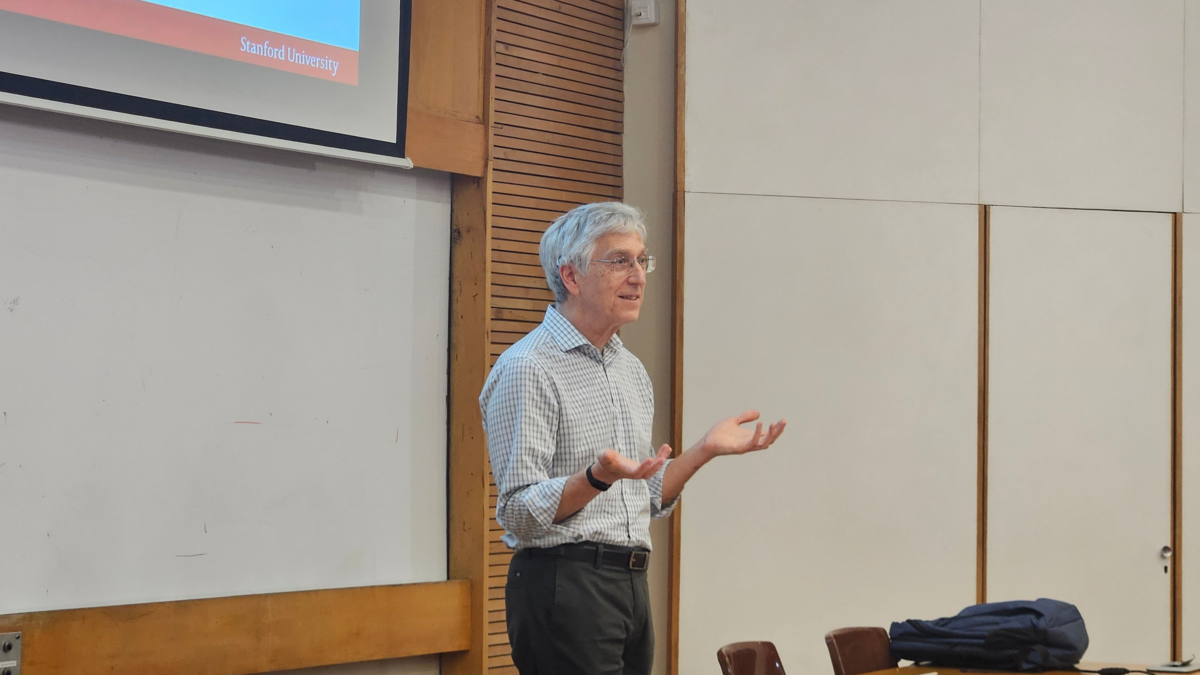
The INESC-ID Distinguished Lectures have made an eagerly-awaited comeback, with the first session, on 23 March, featuring Professor Mark Horowitz from Stanford University, recognised as one of the leading scholars of his generation in integrated circuits and systems design. His research on high-speed CMOS data link interfaces, particularly for memory connections to high-performance computing systems, had a lasting impact on how the electronics industry approaches I/O design.
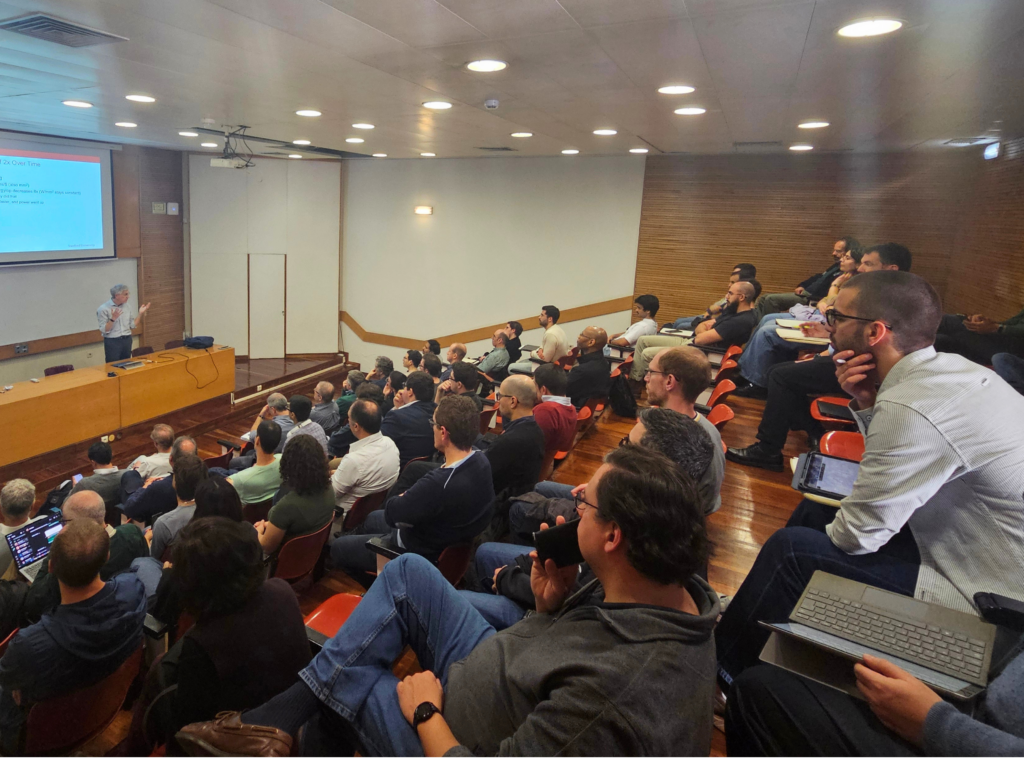
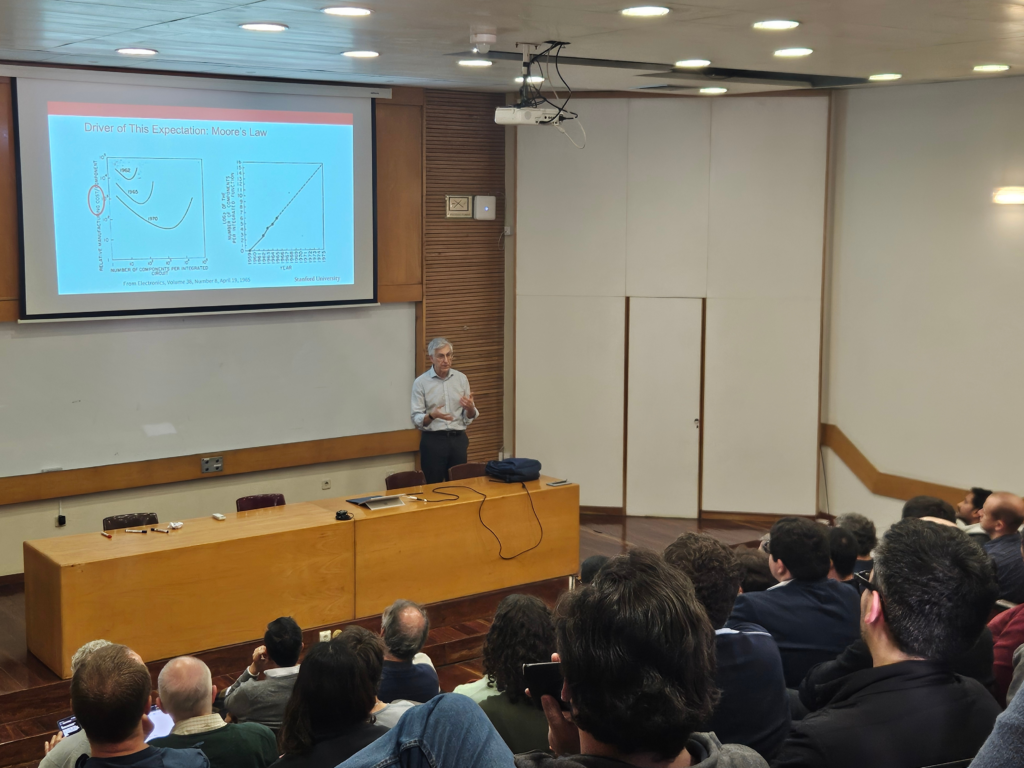
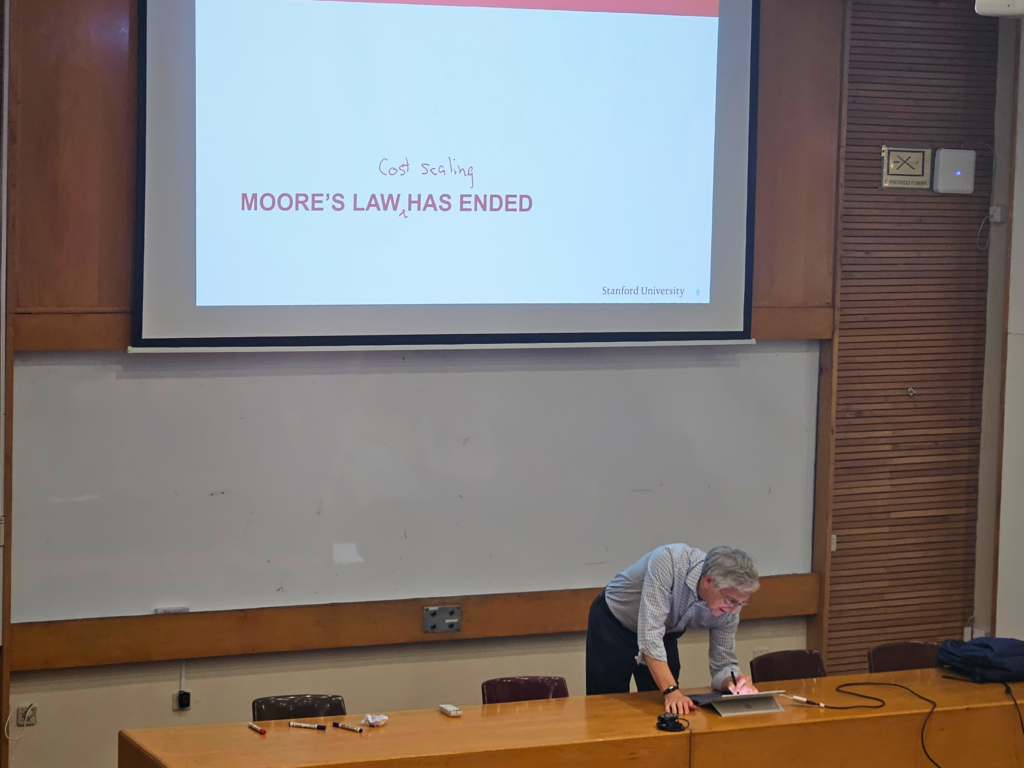
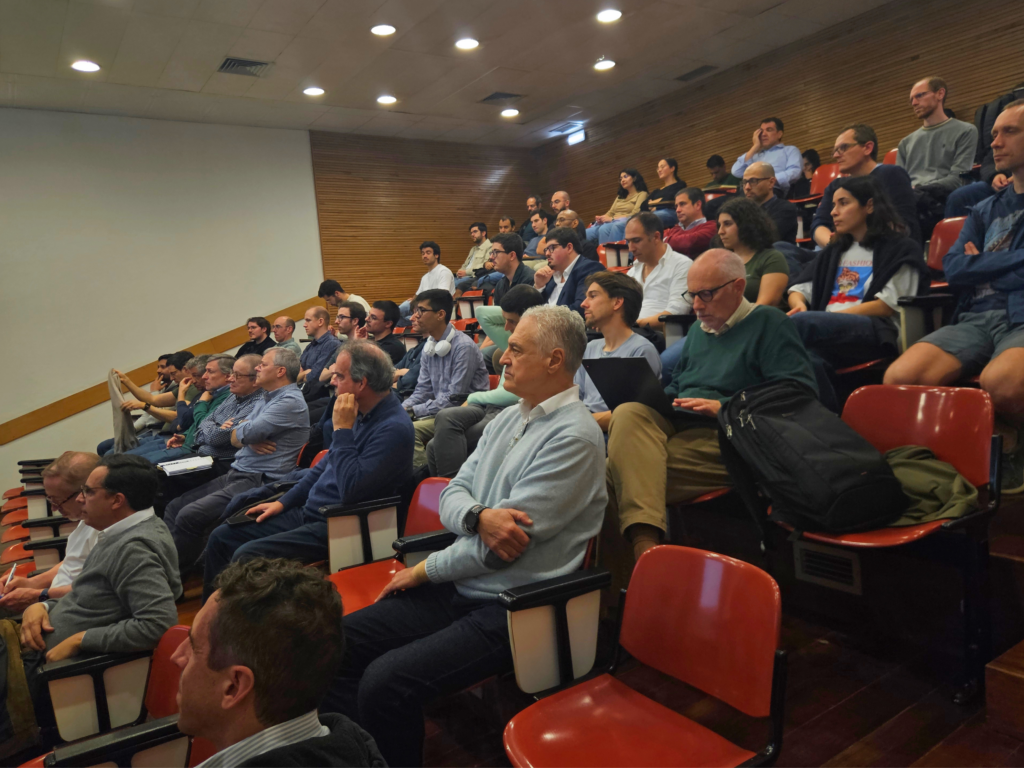
A near-packed room at Instituto Superior Técnico gathered for a talk titled ‘Life Post Moore’s Law: The New Design Frontier’, where Horowitz argued that smaller transistors no longer mean better performance or lower costs, marking the end of a trend the industry had relied on for over 50 years. He concluded that future improvements must come from innovative design tools that enable small groups of application experts to build specialised hardware on top of established platforms, rather than creating entire system solutions from scratch.
“Resuming these lectures is aligned with INESC-ID’s strategy to strengthen internationalisation. They are not only inspiring and serve as an example for our own research, but also build international contacts and collaborations,” said Rodrigo Rodrigues, INESC-ID Scientific Council Coordinator and researcher in Distributed, Parallel and Secure Systems.
“The topic is very timely, and Horowitz works across areas that bridge several research groups, which makes this lecture particularly interesting,” Rodrigo added. New sessions are planned, each edition depending on the opportunity to bring a renowned speaker to INESC-ID at the right moment.
—
© 2026 INESC-ID
Images: © 2026 INESC-ID