
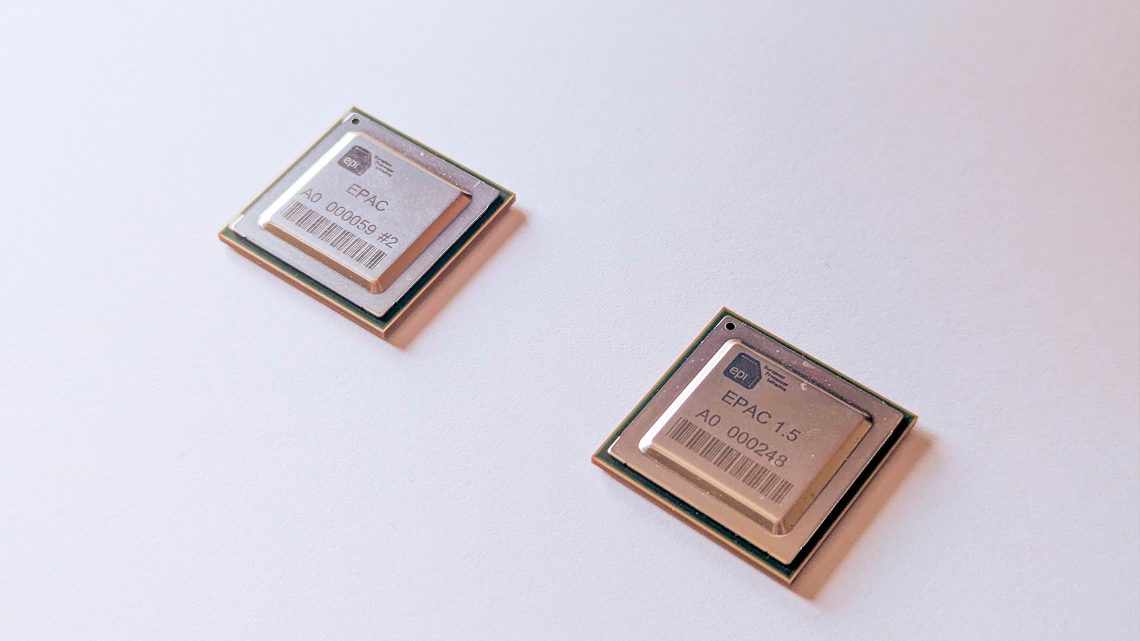
EPI successfully completes the first European processor
The European Processor Initiative (EPI) project has achieved a milestone for Europe’s digital autonomy with the development of the first European processor. Among the many teams involved, the Portuguese contribution was led by researchers from INESC‑ID.
Aiming to advance processors capable of powering Europe’s future high‑performance computing (HPC) centres, EPI’s journey recently culminated with the demonstration of the fully operational 80‑core Rhea1 processor, complemented by a portfolio of HPC accelerator chips. As the most complex processor ever designed in Europe, Rhea1 will equip JUPITER, the continent’s first exascale supercomputer.
INESC‑ID researchers played a central role in this effort, with Leonel Sousa coordinating the Portuguese team, and contributions from Pedro Tomás, Nuno Roma, Aleksandar Ilic, Nuno Neves and several PhD and master’s students. Their work focused on developing equipment capable of monitoring system operations and assessing their performance quality, ensuring the reliability.
To secure long-term European sovereignty in digital technologies, continuity of these results is essential. Building on this achievement, the work will progress through initiatives such as DARE, which aims to expand the range of European-made HPC equipment, strengthening its technological independence.
Know more:
Article in Técnico
Our report on DARE
© 2026 INESC-ID. When sharing this article, credit INESC-ID with a link to the original source.
Image: © Instituto Superior Técnico